
A freshman walks into an unfamiliar building on the first day of class, looking for a room number that isn’t on any map she’s been given. That’s not a small inconvenience. That’s the first impression the whole university just made.
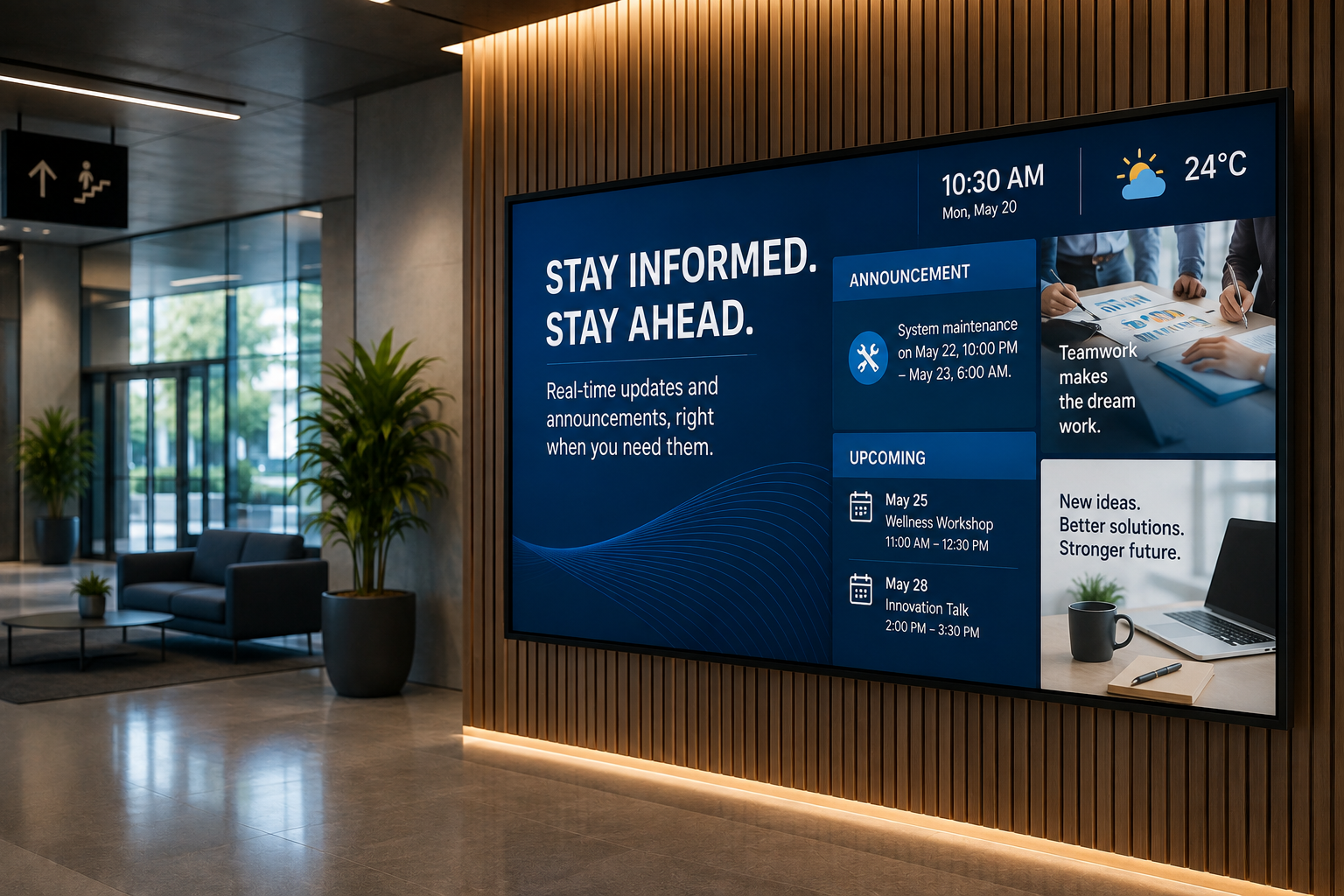
Campuses solve this problem differently depending on how seriously they take it. Some still rely on printed maps and bulletin boards taped over with last month’s flyers. Others have moved to digital signage for schools Pakistan, and universities included, are increasingly adopting for exactly this reason: real-time information beats static paper every single time it actually matters.
When Digital Signage Becomes Safety Infrastructure
This is the part that separates digital signage as a convenience from digital signage as something closer to critical infrastructure.
Connected to a campus’s emergency alert system, screens across every building can display lockdown instructions, evacuation routes, or severe weather warnings within seconds, not the minutes it takes for an email to reach every inbox. During a genuine emergency, that speed isn’t a nice feature. It’s the entire point of the system.
The Problems Nobody Notices Until Orientation Week
Wayfinding sounds like a minor use case until a campus has thousands of new students trying to find lecture halls, libraries, and dining halls in the same week.
Interactive directories placed in building lobbies solve this without pulling administrative staff away from actual work to give directions all day. The same screens do double duty for admissions, looping campus highlights and student stories in visitor centers, which matters more than it sounds like when a prospective student is deciding between two universities based partly on which one feels more current.
It’s not about screens replacing people. It’s about screens handling the repetitive information people shouldn’t have to keep repeating.
More Than One Job Per Screen
A single well-placed display in a student center can rotate through event promotions, campus news, and emergency alerts without needing three separate boards to do it.
Dining halls benefit specifically, menu boards updated in real time by staff rather than reprinted and re-laminated every time a dish changes. Event promotion for sports games, guest lectures, and theater productions gets a screen that actually moves and catches attention, instead of a poster competing with fifty others on the same board. Multiple zones on the same display can even run different content simultaneously, wayfinding in one section, live event info in another.
Optimum
Universities don’t need one screen doing one job. They need a network of them, working together, backed by someone who understands how campuses actually operate day to day.
Optimum supplies the exact mix campuses need for this: interactive touch displays for wayfinding kiosks, digital menu boards for dining halls, and LCD and LED video walls for high-traffic common areas, all built around brands like Samsung and Philips.
FAQ’s
1.Can digital signage really improve emergency response on campus?
Yes. Integrated with an emergency alert system, screens can broadcast lockdown, evacuation, or weather instructions campus-wide within seconds.
2. Does digital signage help with student wayfinding?
Yes, particularly for new students navigating unfamiliar buildings during orientation and the first weeks of a semester.
3. Can one screen serve multiple purposes throughout the day?
Yes. Digital signage can rotate between wayfinding, dining menus, event promotion, and emergency alerts as needed.
4. Is digital signage cost-effective compared to printed materials?
Over time, yes. It reduces recurring printing and reprint costs while allowing instant content updates.
5. Where can universities in Pakistan source reliable campus digital signage?
Optimum supplies interactive displays, video walls, and menu boards suited for digital signage for schools Pakistan campuses can rely on.
Conclusion
A bulletin board tells students what the truth was last month. Digital signage tells them what’s true right now.
On a campus with thousands of people trying to find a room, catch an alert, or just figure out what’s for lunch, that difference is the whole system working, or not.